Route 66 Is Born: The Month America Numbered Its Roads
In November 1926 the nation's highways got numbers, and a 2,448-mile road from Chicago to Los Angeles got the most famous one of all. Gas stations, diners and motels followed.
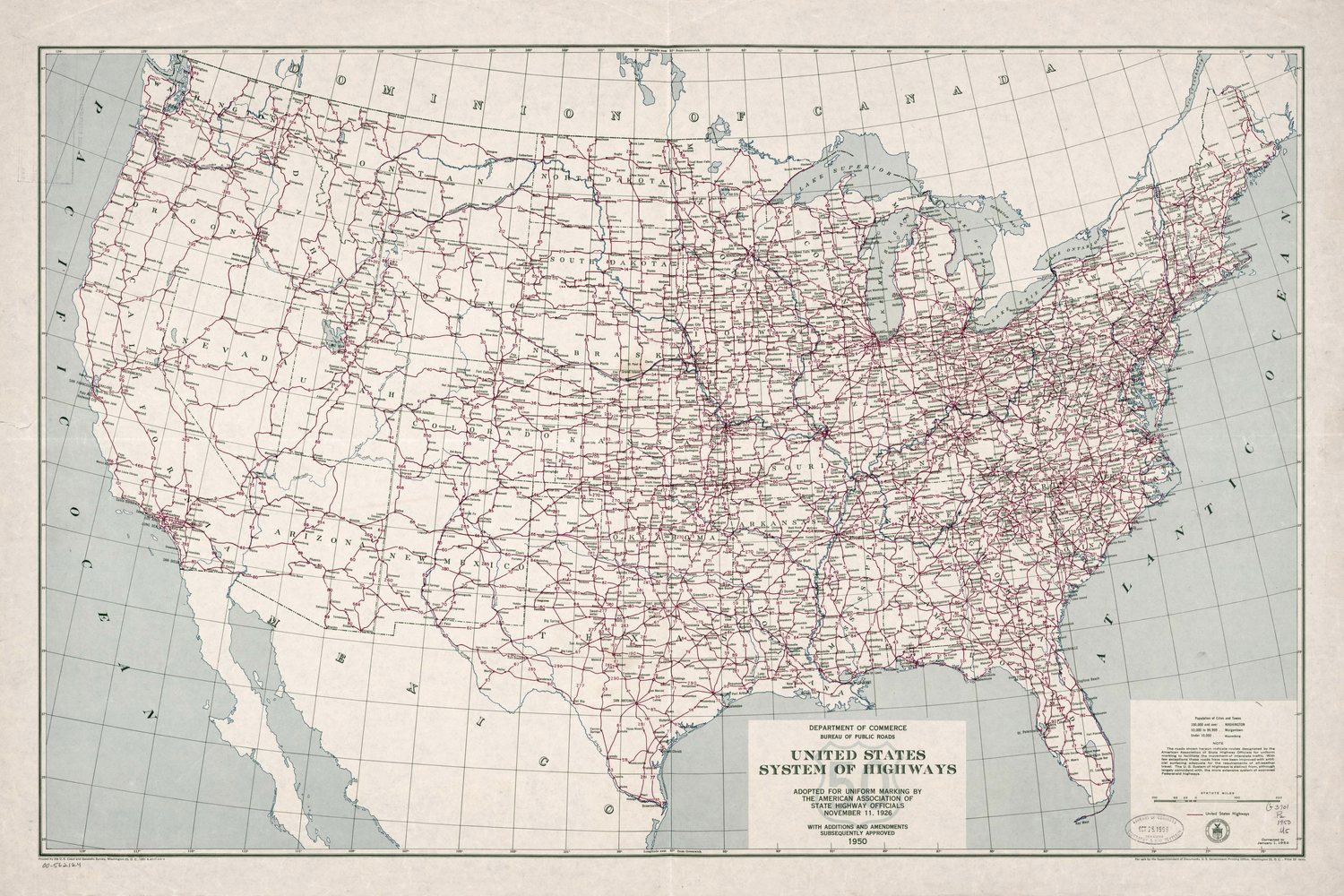
In the fall of 1926, a driver heading west from Chicago faced a puzzle. The roads had names, not numbers — the Lincoln Highway, the Old Trails Road, the Ozark Trail — and they were marked by private clubs with painted bands on telephone poles. One road could carry several names; signs changed at every state line.
That changed this month a century ago. On November 11, 1926, the American Association of State Highway Officials approved a single national plan: the United States System of Highways. East–west routes got even numbers, north–south routes got odd ones, and every state agreed to use the same shield-shaped signs.
Why "66"?
One of the new routes ran 2,448 miles from Jackson Boulevard and Michigan Avenue in Chicago, through St. Louis, Tulsa and Albuquerque, to downtown Los Angeles. Its champion, the Oklahoma highway official Cyrus Avery, first wanted it to be Route 60. Kentucky objected, because it wanted 60 for a road of its own. An Oklahoma engineer noticed that 66 was still free, and Avery took it. The double-six turned out to be easy to say, easy to remember — and, later, easy to sing.
Route 66 by the numbers
- Approved: November 11, 1926
- Length in 1926: 2,448 miles (3,940 km)
- Ends: Chicago, Illinois, and Los Angeles, California
- Signs went up: from 1927
- This year: the road's 100th birthday
A road that sold gasoline
In 1926 much of the route was still gravel or dirt. But a numbered, signposted road gave people the confidence to drive it, and drivers need fuel, food and a bed. Filling stations, garages, diners and motor courts sprang up along the way, and small towns that sat on "66" found new customers rolling in every day. The highway plan turned the car into a long-distance machine — and turned gasoline into an everyday purchase for millions of families.
The road was replaced by interstates decades later, but its pull never faded. In 2026, towns from Illinois to California are celebrating the centennial of the road that taught America to travel by car.
Sources
- Library of Congress: United States system of highways, adopted for uniform marking by the American Association of State Highway Officials, November 11, 1926 (1950 edition)
- U.S. Route 66 (Wikipedia overview: length, endpoints, numbering)
- Federal Highway Administration: highway history
- Country Roads Magazine: 100 years of the U.S. highway system
Dollar conversions use the U.S. Bureau of Labor Statistics CPI-U (1926 annual average 17.7; September 2026: 336.94), a factor of about 19.